

Google Beam AI is a real Google technology drive that has generated expanding online interest. Many users encounter the term while studying immersive communication, artificial intelligence, or emerging Google inquiry systems. The intent behind Google Beam is primarily educational, driven by curiosity and a desire for clarity. Users want to understand whether it’s a product, a conception, or a misunderstood Google search attribute. Confusion also arises because the name overlaps with old Google search jokes and Easter eggs. This lapping makes accurate explanations especially important for long- term search relevancy and user trust.
What Is Google Beam AI?
Google Beam AI is Google’s advanced AI-powered video communication system designed for realistic remote interaction. It originated from Google’s experimental Project Starline research, later refined into a named platform. The technology focuses on creating lifelike, three- dimensional video chats without wearable devices.
When users search for what Google Beam is, they’re seeking a clear description, not speculation. Google Beam AI uses artificial intelligence, depth sensing, and specialized displays to recreate the sense of presence. The experience aims to give a more natural feel to in- person conversation than traditional video conferencing allows.
Core Concept and Purpose of Google Beam AI
The core purpose of Google Beam AI is to improve human connection across physical distance. Standard video calls often fail to convey eye contact, body language, and spatial awareness. Google Beam addresses these limitations through advanced visual reconstruction and display technology. The system captures users from multiple angles using high- resolution cameras. AI models synthesize these inputs into a coherent, real- time 3D representation. This representation appears life-sized and naturally fixed relative to the watcher. Google designed the platform for professional environments where presence impacts communication quality. It is not intended for casual messaging or social media interaction.
How Google Beam AI Works?
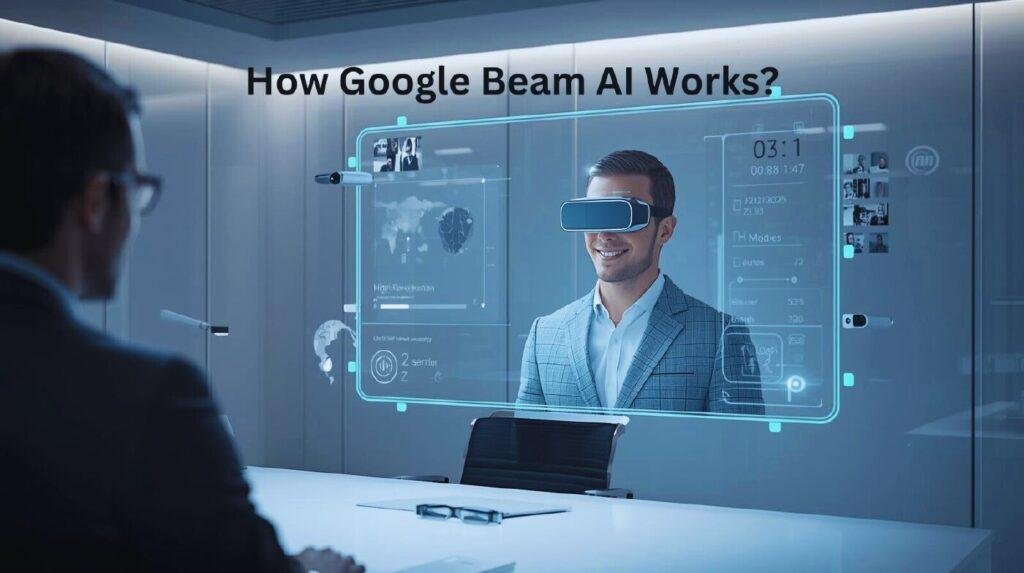
Google Beam AI relies on a tightly integrated hardware and software ecosystem. Special camera arrays capture fine facial expressions, head movement, and posture changes. Depth sensors measure spatial positioning with extreme precision. Machine learning models process this data with minimal latency. The system reconstructs realistic geometry, lighting, and perspective in real time. Eye contact is preserved by aligning camera placement with display output. Audio processing complements the visual experience through spatial alignment. Voices appear to originate from the correct on-screen position. This alignment improves conversational flow and reduces cognitive fatigue.
Why Users Are Actively Searching for Google Beam AI?
User interest in Google Beam AI reflects broader trends in remote collaboration and AI development. As remote work expanded, limitations of conventional video calls became more apparent. Users began searching for solutions that feel more natural and engaging. Some users discover Google Beam AI through Google I/O presentations or research blogs. Others encounter the term while reading about future workplace technologies. Searches often combine curiosity with skepticism, especially regarding practicality and availability. Misleading associations with unrelated Google features further increase search volume. Clear explanations help users align expectations with reality.
Google Beam AI and the “Beam Me Up Scotty”
Google Beam AI has no functional connection to Google’s novelty search results. However, many users unintentionally associate the two due to similar wording. The phrase beam me up scotty google refers to a playful Google Easter egg. Typing it triggers an animated screen distortion inspired by Star Trek. This effect exists solely for entertainment purposes. Users also search beam me up scotty google trick, expecting hidden functionality. These searches do not reveal tools, AI systems, or experimental products.
Why Google Easter Eggs Cause Ongoing Confusion?
The beam me up scotty google easter egg predates Google Beam AI by many years. It was designed to reward curiosity, not to introduce real technology. Because both include the word “beam,” search results sometimes overlap unintentionally. Queries like beam me up google or google beam me up amplify confusion. These phrases trigger visual effects, not product pages or documentation. They do not indicate teleportation, communication tools, or artificial intelligence. Clear separation between entertainment features and real products protects user understanding.
Online Discussions and Community Interest
Public discussion around Google Beam AI appears across technology-focused platforms. Searches such as Google Beam Reddit reflect this interest clearly. Reddit users often discuss realism, technical feasibility, and enterprise deployment. Some compare Beam to holograms or virtual reality communication systems. Others question long-term scalability and infrastructure requirements. Most discussions remain analytical rather than promotional. This suggests users are evaluating Beam as a serious professional tool.
Questions About Google Beam Cost and Pricing
Pricing curiosity is common with advanced Google technologies. Users frequently search for Google Beam cost or Google Beam price. As of now, Google has not released official pricing information. This absence is intentional, given Beam’s enterprise-focused positioning. The system requires specialized hardware and controlled environments. These factors imply higher costs than consumer video conferencing solutions. Google has avoided speculative claims regarding affordability or mass adoption. Users should treat unofficial pricing estimates with caution.
Availability and Realistic Expectations
Google Beam AI isn’t presently marketed as a consumer product. Google Beam (formerly Project Starline) is presently sold as an enterprise- grade, high- end, 3D video conferencing platform, not as a consumer product. Early use cases center on research, enterprise, and institutional collaboration. Deployment requires physical installations rather than software downloads. Google continues refining the technology before broader release decisions. This measured approach aligns with responsible AI development practices. Beam is designed to complement existing communication tools, not replace them. Its value lies in high-impact interactions where presence truly matters.
Conclusion
Google Beam AI is a legitimate, research-driven communication platform developed by Google. It is unrelated to playful Google search tricks or novelty Easter eggs. Terms referencing “Scotty” activate entertainment features only. Google Beam focuses on realism, trust, and professional communication quality. Understanding this distinction prevents confusion and unrealistic expectations. Accurate information helps users evaluate the technology responsibly. That clarity supports better search experiences and long-term trust in Google content.